At Sattvik Spine, every spine problem is treated with care, patience, and medical understanding. Spine surgery is never rushed. It is planned only after fully understanding the person, the problem, and the long-term effect on daily life.
This case study shares two real spine cases treated by Dr. Yogesh K. Pithwa. These cases show how thoughtful decisions can improve movement, reduce pain, and protect long-term spine health.
Case 1: Scoliosis in a Young Patient – Treating Only What Is Needed
A 14-year-old girl came to Sattvik Spine with a visible curve in her back. Her posture had changed slowly over time. Tests showed two curves in her spine:
- A larger curve in the lower back
- A smaller curve in the upper back
The condition was not just about appearance. If ignored, it could affect balance, walking, and confidence.
Understanding the Real Problem
Instead of treating the entire spine, Dr. Yogesh K. Pithwa carefully studied how the spine moved. He noticed that the lower curve was the main cause of imbalance. The upper curve had the ability to correct itself once the lower part was treated.
This careful observation helped avoid unnecessary surgery.
The Surgical Decision
Only the affected part of the spine was treated. This approach is called selective fusion. It helps:
- Protect healthy parts of the spine
- Reduce stiffness after surgery
- Lower the physical and emotional burden on the patient
This reflects the values of minimally invasive spine surgery, where preserving natural movement is always a priority.
The Result
After surgery:
- The spine became well balanced
- The patient stood straight
- Movement was smooth and natural
- Long-term results remained stable
This showed that doing less can sometimes do more.

Case 2: Adult Spine Condition – When Stability Matters Most
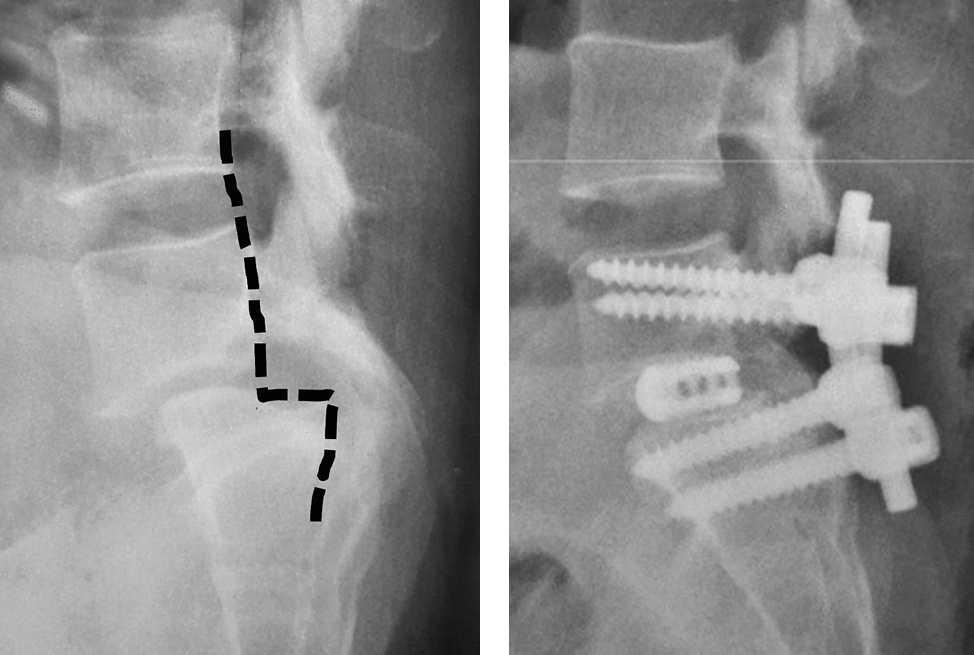
A 29-year-old woman came with severe lower back pain and pain spreading to both legs. Walking had become difficult, and daily tasks were tiring.
Scans showed grade 3 spondylolisthesis, where one bone had slipped forward and disturbed spinal alignment.
Choosing the Right Surgical Method
In this situation, surgery was necessary. However, the method mattered greatly.
Dr. Yogesh K. Pithwa used a technique involving monoaxial screws, which help restore spinal balance and provide strong support. This approach allows better correction and long-term stability.
Such precision is often seen in experienced endoscopic spine surgeons in Bangalore, where careful planning leads to safer outcomes.
The Outcome
After surgery:
- Pain reduced significantly
- Walking became easier
- Posture improved
- Daily activities returned to normal
The spine remained stable even after recovery.
What These Two Cases Teach Us
Although the patients had different conditions, the approach remained the same:
- Understand the real cause before treatment
- Avoid unnecessary surgical steps
- Protect natural movement
- Focus on long-term comfort and stability
This thoughtful method defines care at Sattvik Spine.
Why This Matters for Patients
When people look for help with spine problems, they often search for trusted care, clear guidance, and long-term safety. Some want to understand scoliosis treatment options, while others are looking for experienced care in complex spine conditions.
What truly matters is finding a place where decisions are made carefully, not quickly. At Sattvik Spine, every treatment plan is shaped around the patient — their condition, comfort, and future quality of life.
Many people exploring options such as minimally invasive spine care in Bangalore or advanced spine surgery in India want reassurance more than promises. They want to know that surgery is recommended only when truly needed and done with precision.
This thoughtful approach helps patients feel informed, supported, and confident about their next steps.
A Gentle Note for Readers
If you or someone close to you is facing spine-related concerns, learning is the first step. Understanding your condition allows you to ask better questions and make calm decisions.
You don’t have to rush. Take time to understand your options, observe your symptoms, and seek guidance from a expert like Dr Yogesh K Pithwa when you feel ready. A careful conversation with an experienced specialist can help you choose the safest and most suitable path forward.