
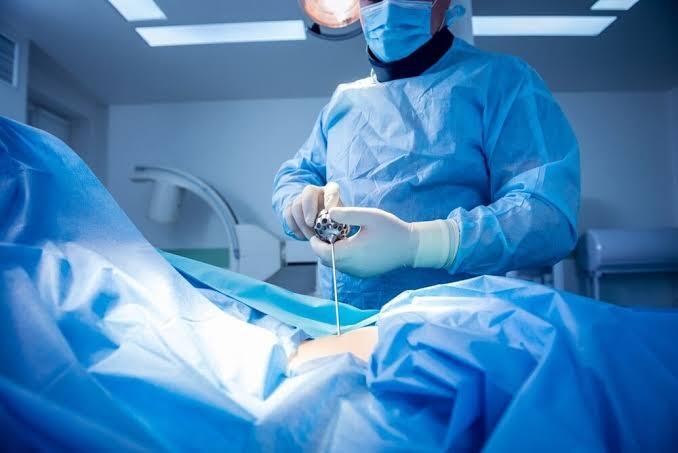
Advanced endoscopic spine surgery is changing how selected spinal conditions are treated and how patients recover after surgery. A recent publication on Asianet News featuring Dr. Yogesh K. Pithwa, Senior Spine Surgeon and Founder/Chief Surgeon of Sattvik Spine & Scoliosis Center, Bengaluru, explores how modern endoscopic techniques are redefining recovery after spine surgery.
The article, “How Advanced Endoscopic Techniques Are Redefining Recovery After Spine Surgery,” discusses the development of minimally invasive spine procedures, their potential recovery benefits, different endoscopic techniques and the importance of careful patient selection.
What Is Endoscopic Spine Surgery?
Endoscopic spine surgery is a minimally invasive technique that uses a small incision, a camera-equipped tube called an endoscope and specialized surgical instruments to reach the affected area of the spine.
Unlike many traditional open procedures, endoscopic techniques can reduce the amount of muscle and soft tissue that needs to be disturbed. Depending on the patient’s condition, the surgeon may use the technique to remove a herniated disc fragment or decompress a nerve.
Endoscopic surgery may be considered for selected cases of:
- Lumbar disc herniation
- Foraminal stenosis
- Lateral recess stenosis
- Selected spinal canal stenosis
- Cervical disc-related nerve compression
- Cervical radiculopathy
The right approach depends on the location of the problem, spinal anatomy, symptoms and imaging findings.
What Does the Asianet News Feature Highlight?
In the Asianet Newsable publication, Dr. Yogesh K. Pithwa explains how next-generation endoscopic techniques can support a less disruptive surgical approach and potentially improve the recovery experience for appropriately selected patients.
The article highlights potential benefits such as lower blood loss, shorter hospital stays and an earlier return to normal activities compared with some traditional open procedures.
Published research has also reported similar findings for selected procedures. A meta-analysis involving more than 1,000 patients found that endoscopic discectomy was associated with lower blood loss and shorter hospital stays compared with open discectomy. Patient satisfaction was also higher in the endoscopic group in that analysis.
However, endoscopic spine surgery is not a replacement for every type of spine operation. Patient selection remains an important part of treatment planning.
Advanced Endoscopic Techniques
Modern endoscopic spine surgery includes several approaches.
Transforaminal Endoscopy
The transforaminal approach reaches the affected area through the natural opening between the vertebrae. It can be used for selected lumbar disc herniations and foraminal problems.
Interlaminar Endoscopy
The interlaminar approach uses the space between the vertebral bones to access the affected area. It can be useful for selected disc herniations, including some L5-S1 conditions.
Biportal Endoscopy
Biportal endoscopic surgery uses two small portals. One is generally used for the camera and the other for surgical instruments. This can provide greater flexibility during selected decompression procedures.
The choice of technique is based on the patient’s spinal condition and anatomy rather than simply choosing the newest available method.
How Can Endoscopic Surgery Support Recovery?
One of the major areas of interest in endoscopic spine surgery is postoperative recovery.
Because the procedure uses a small access point, there may be less disruption to surrounding muscles and tissues. Research has reported lower blood loss and shorter hospital stays with several endoscopic techniques when compared with conventional procedures.
Some appropriately selected patients may also return to light daily activities relatively quickly.
However, recovery is different for every patient. The type of spinal problem, surgical procedure, overall health and postoperative rehabilitation all influence recovery time.
Patients should follow their surgeon’s advice regarding driving, work, exercise and lifting after surgery
Is Endoscopic Spine Surgery Suitable for Everyone?
No.
Endoscopic surgery is most suitable when the spinal problem can be safely reached and treated through a small access channel.
More complex conditions, such as significant spinal deformity, major instability or certain multi-level spinal problems, may require other surgical approaches, including stabilization or fusion.
This is why a detailed evaluation is essential before choosing endoscopic spine surgery.
The experience and training of the surgeon are also important because endoscopic procedures require specialized skills, equipment and knowledge of spinal anatomy.
Why Proper Patient Selection Matters
The goal of spine surgery should not simply be to use the least invasive technique. The goal is to select the right treatment for the patient’s specific condition.
A spine specialist may evaluate:
- Symptoms and duration
- Neurological findings
- MRI or other imaging
- Location of nerve compression
- Disc or bone changes
- Spinal stability
- Previous treatments and surgeries
Based on these findings, the surgeon can discuss whether endoscopic surgery, another minimally invasive procedure, non-surgical treatment or traditional surgery is appropriate.
Dr. Yogesh K. Pithwa and Sattvik Spine
Dr. Yogesh K. Pithwa is a Senior Spine Surgeon and Founder/Chief Surgeon of Sattvik Spine & Scoliosis Center, Bengaluru.
His clinical interests include endoscopic spine surgery, minimally invasive spine surgery, scoliosis, spinal deformities, degenerative spine conditions and complex spinal disorders.
The recent Asianet Newsable feature highlights his perspective on how advances in endoscopic techniques are contributing to the evolution of spine surgery and recovery.
For patients considering endoscopic spine surgery in Bengaluru, an individual consultation can help determine whether the procedure is appropriate for their condition.