
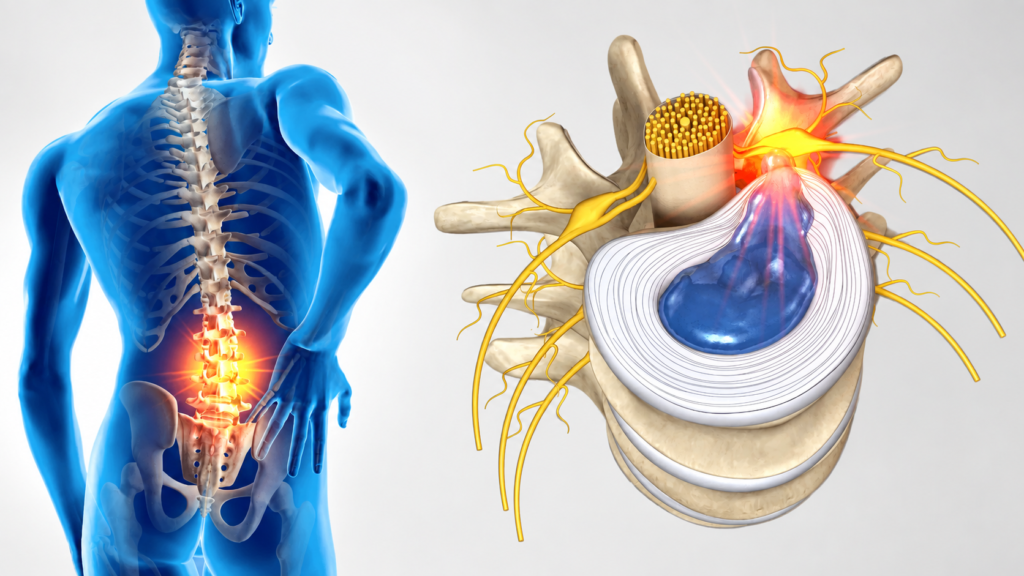
A slipped disc does not always mean surgery. In many cases, symptoms can improve with appropriate non-surgical treatment, activity modification, medication, physiotherapy and time. However, the right treatment depends on the location and severity of the disc problem, the symptoms it is causing, and whether a nerve or the spinal cord is being compressed.
If you have persistent back pain, sciatica, numbness or weakness, getting the condition properly evaluated is important before deciding whether surgery is necessary.
For patients looking for a slipped disc specialist in Bengaluru, understanding the available treatment options can make the decision less confusing.
What Is a Slipped Disc?
Your spine is made up of individual bones called vertebrae. Between these bones are flexible structures called intervertebral discs that act as cushions and help your spine move.
A disc has a strong outer layer and a softer inner portion. When the outer portion develops a tear or weakness and the inner material pushes outward, it can result in a herniated disc, commonly called a slipped disc.
A slipped disc may not cause any symptoms at all. Problems usually occur when the displaced disc material irritates or compresses a nearby nerve.
Depending on where the disc problem occurs, you may experience:
- Lower back pain
- Pain spreading into the buttock or leg
- Sciatica
- Numbness or tingling
- Muscle weakness
- Neck pain
- Pain extending into the shoulder, arm or hand
- Difficulty performing certain movements
Not every disc problem requires the same treatment.
Can a Slipped Disc Heal Without Surgery?
The body can gradually reduce the inflammation around the affected nerve, and in some cases the herniated disc material can shrink or be reabsorbed over time.
This does not mean that every patient should simply wait for the problem to disappear.
The appropriate approach depends on factors such as:
- Severity of your symptoms
- Duration of pain
- Presence of numbness or weakness
- Location of the disc herniation
- Findings on an MRI or other investigations
- Response to conservative treatment
- Whether the nerve compression is getting worse
- Whether there are signs of serious neurological problems
This is why a proper clinical assessment is more useful than assuming that surgery is either always necessary or never necessary.
How Is a Slipped Disc Treated Without Surgery?
When there are no emergency warning signs, doctors may initially recommend conservative treatment.
- Activity Modification
Complete bed rest is generally not the goal.
Depending on your symptoms, you may need to temporarily reduce activities that aggravate your pain while continuing safe, gentle movement.
Your doctor may advise you to modify:
- Heavy lifting
- Bending and twisting
- Prolonged sitting
- High-impact activities
- Certain gym exercises
The goal is to allow symptoms to settle without unnecessarily restricting normal movement.
- Medicines for Pain and Inflammation
Depending on your condition and medical history, a doctor may recommend medication to control pain and inflammation.
Medication should be taken according to medical advice rather than self-prescribed for prolonged periods.
- Physiotherapy
Physiotherapy can be an important part of non-surgical management.
A physiotherapist may develop an individualized program focusing on:
- Improving mobility
- Strengthening supporting muscles
- Improving posture
- Gradually returning to normal activity
- Reducing strain on the spine
- Improving movement patterns
Exercises should be selected according to your diagnosis and symptoms. An exercise that helps one person may aggravate another person’s condition.
- Lifestyle and Posture Changes
Long periods of sitting, poor lifting techniques, physical inactivity and inappropriate exercise can contribute to recurring back problems.
Simple changes may include:
- Taking regular breaks from prolonged sitting
- Using an ergonomically appropriate workstation
- Maintaining healthy body weight
- Learning proper lifting techniques
- Gradually increasing physical activity
- Following a structured rehabilitation program
- Image-Guided or Other Non-Surgical Procedures
In selected patients with persistent symptoms, a spine specialist may consider procedures designed to reduce nerve irritation and pain.
Whether such treatment is appropriate depends on the specific cause of the symptoms and examination findings.
How Long Does a Slipped Disc Take to Heal Without Surgery?
There is no single recovery time that applies to everyone.
Some people experience significant improvement within a few weeks, while others may have symptoms that continue for longer.
Recovery can depend on:
- Size and location of the disc herniation
- Degree of nerve irritation
- Severity of symptoms
- Overall health
- Activity level
- Response to treatment
- Whether neurological symptoms are present
An important point is that pain intensity alone does not always tell you how serious a disc problem is.
A person with severe pain may improve with conservative care, while someone with relatively manageable pain but progressive weakness may need more urgent evaluation.
When Does a Slipped Disc Need Surgery?
Surgery is not automatically required simply because an MRI shows a slipped disc.
However, surgery may become an option when symptoms are persistent, severe or associated with significant neurological problems.
A spine surgeon may consider surgery when:
Persistent Pain Is Not Improving
If significant pain continues despite an appropriate period of non-surgical treatment, further evaluation may be necessary.
There Is Progressive Muscle Weakness
Increasing weakness in the leg, foot, arm or hand can indicate significant nerve compression and should not be ignored.
Nerve Compression Is Severe
Imaging may show compression that corresponds with your clinical symptoms. Your doctor will consider both the scan and physical examination when deciding whether surgery may help.
Symptoms Continue to Affect Daily Life
When pain or neurological symptoms continue to interfere substantially with walking, working, sleeping or everyday activities despite appropriate treatment, surgical options may be discussed.
Emergency Symptoms Develop
Certain symptoms require urgent medical attention.
Seek immediate medical evaluation if you develop symptoms such as:
- New loss of bladder or bowel control
- Numbness around the genital or saddle region
- Rapidly worsening weakness
- Severe neurological changes
These symptoms can indicate serious nerve compression and should not be managed by waiting at home.
Does an MRI Mean You Need Slipped Disc Surgery?
No.
MRI scans can show disc bulges, protrusions and herniations even in people who have little or no pain.
This is why treatment should not be based on an MRI report alone.
A spine specialist generally considers three things together:
Symptoms + clinical examination + imaging
The disc abnormality needs to match the symptoms and examination findings before it can confidently be identified as the main cause of the problem.
This distinction is particularly important because treating an MRI image rather than treating the patient can lead to unnecessary procedures.
Slipped Disc vs Sciatica: Are They the Same?
Not exactly.
A slipped disc is a structural problem involving an intervertebral disc.
Sciatica describes a pattern of pain caused by irritation or compression of the sciatic nerve or its nerve roots.
A slipped disc can cause sciatica when it compresses or irritates a nerve root in the lower spine.
Typical sciatic pain may travel from the lower back or buttock into the:
- Thigh
- Calf
- Foot
You may also experience tingling, numbness or weakness.
However, not every case of sciatica is caused by a slipped disc. Other spinal conditions can also affect the nerves.
Can Walking Help a Slipped Disc?
For many people, gentle movement and walking can be preferable to prolonged bed rest, provided walking does not significantly worsen symptoms.
Short, comfortable walks may help you remain active while your symptoms settle.
However, if walking causes increasing leg pain, numbness or weakness, you should discuss your symptoms with a spine specialist rather than pushing through the pain.
The right level of activity should be individualized.
Can Exercise Cure a Slipped Disc?
Exercise cannot be described as a universal cure for every slipped disc.
However, appropriately selected exercises can play an important role in managing symptoms and improving spinal function.
Depending on the diagnosis, rehabilitation may focus on:
- Core and spinal muscle strength
- Flexibility
- Posture
- Movement control
- Hip and lower-limb strength
- Gradual return to activity
Avoid copying exercises from social media or following an aggressive workout plan when you have significant pain, numbness or weakness.
A personalized rehabilitation plan is safer and more appropriate.
What Happens If You Ignore a Slipped Disc?
Some slipped discs improve with time, but ignoring persistent or worsening symptoms is not advisable.
Untreated nerve compression can sometimes result in continuing pain, sensory changes or weakness.
More importantly, progressive neurological symptoms should be evaluated promptly.
If your back pain is accompanied by increasing weakness, significant numbness or changes in bladder or bowel function, seek medical attention rather than waiting for the symptoms to resolve on their own.
When Should You See a Spine Specialist?
Consider consulting a spine specialist if:
- Your back pain persists despite initial self-care
- Pain travels down your leg or arm
- You have recurring episodes of severe back pain
- You experience numbness or tingling
- You notice weakness
- Pain is affecting your sleep or daily activities
- Symptoms are getting worse
- You have already been diagnosed with a disc problem and want to understand your treatment options
If you are searching for a back specialist or a back problem doctor in Bengaluru, the priority should be finding a specialist who evaluates your symptoms, examination findings and imaging together.
Why a Specialist Assessment Matters Before Choosing Surgery
One of the biggest concerns patients have after receiving an MRI diagnosis is:
“Do I need surgery?”
The answer cannot be determined from the MRI report alone.
A specialist assessment can help determine:
- Whether the disc is actually responsible for your symptoms
- Whether the nerve is being compressed
- Whether conservative treatment is appropriate
- Whether further investigations are required
- Whether an injection or other treatment could be considered
- Whether surgery is likely to provide meaningful benefit
The objective should not be to recommend surgery simply because a disc abnormality is visible on a scan.
The objective is to choose the least invasive treatment that is appropriate for the patient’s condition while protecting neurological function and quality of life.
Dr Yogesh K Pithwa: Spine Care in Bengaluru
For patients seeking specialized evaluation for back and spine conditions, Dr Yogesh K Pithwa focuses on the diagnosis and treatment of spinal disorders.
Patients looking for a spine surgeon in Bangalore can discuss symptoms such as persistent back pain, sciatica, slipped disc, nerve compression and other spinal conditions with an experienced spine specialist.
If your symptoms have not improved with conservative treatment, a detailed evaluation can help determine whether you should continue non-surgical care or consider another treatment option.
For patients searching for a pain in spine treatment in Bengaluru, the first step should be identifying the underlying cause rather than treating pain alone.
Frequently Asked Questions
Can a slipped disc heal naturally?
Yes. Many slipped discs improve with time and appropriate non-surgical treatment. However, recovery varies depending on the severity and location of the disc problem and whether nerves are affected.
Is surgery always required for a slipped disc?
No. Surgery is not necessary for every slipped disc. Many patients can improve with conservative treatment. Surgery may be considered when symptoms persist or significant neurological problems develop.
How long does it take for a slipped disc to recover?
Recovery varies between individuals. Some patients improve within several weeks, while others may require longer treatment and rehabilitation.
Can a slipped disc cause leg pain?
Yes. A slipped disc in the lower back can irritate or compress a nerve root and cause pain that travels into the buttock and leg.
Can physiotherapy help a slipped disc?
Physiotherapy may help improve mobility, strength and function and can be an important part of non-surgical treatment when appropriately prescribed.
Does every slipped disc seen on MRI cause pain?
No. Disc abnormalities can sometimes appear on imaging in people who do not have symptoms. Clinical examination and symptoms are important when determining whether the disc is responsible for the problem.
When should I see a spine surgeon for a slipped disc?
You should consider specialist evaluation when pain persists, symptoms repeatedly return, you develop numbness or weakness, or your symptoms significantly interfere with daily activities.
Can I walk with a slipped disc?
In many cases, gentle walking is possible and may be preferable to prolonged inactivity. However, activity should be adjusted according to your symptoms and medical advice.
Can a slipped disc come back after treatment?
Yes. A previous disc problem does not make future episodes impossible. Maintaining appropriate activity, strength, movement habits and rehabilitation can help support long-term spinal health.
Do I need surgery if my MRI says “disc herniation”?
Not necessarily. An MRI finding needs to be interpreted alongside your symptoms and physical examination. A spine specialist can help determine whether the imaging finding is clinically significant.
Don't Assume a Slipped Disc Means Surgery
A slipped disc can sound alarming, especially when it appears on an MRI report. But a slipped disc diagnosis does not automatically mean you need surgery.
Many patients can improve with appropriate non-surgical treatment, rehabilitation and lifestyle changes. At the same time, persistent pain, progressive weakness or serious neurological symptoms should not be ignored.
The most appropriate treatment depends on the individual patient.
If you are experiencing persistent back or leg pain and want to understand whether your slipped disc can be treated without surgery, consult a qualified spine specialist for a proper evaluation.
Need expert evaluation for a slipped disc or persistent back pain in Bengaluru?